Jabuticaba: plant and growing conditions
JABUTICABA · BOTANICAL PROFILE

Jabuticaba

Plinia cauliflora

Polyphenols and anthocyanins in deep-purple peel

BOTANICALS & EVIDENCE

Jabuticaba Ingredients, SOD-Like and Antioxidant Testing

Jabuticaba (Plinia cauliflora) produces fruit directly on its trunk and mature branches. This page brings together polyphenol information and test data for fermented samples, extract powders and tablets.

Botanical name
Plinia cauliflora
On this page
Quercetin, resveratrol glycoside Piceid, total tannins and in vitro antioxidant indicators
Data checked

What do these test results tell us?

Fermented Jabuticaba, solid extract, extract powder and tablets are different sample types. In vitro testing under strongly acidic conditions does not by itself establish absorption or effects in humans after oral consumption.

The information below covers botanical background and testing of specific samples. Detected compounds are reported as measured.

Check Jabuticaba Original test reports and sample details →
PURPLE POLYPHENOLS · PICEID

Purple polyphenol protection × Understanding piceid

Explore Jabuticaba's phytochemicals, from anthocyanins in its purple-black peel to piceid, quercetin and measured antioxidant activity in the tested samples.

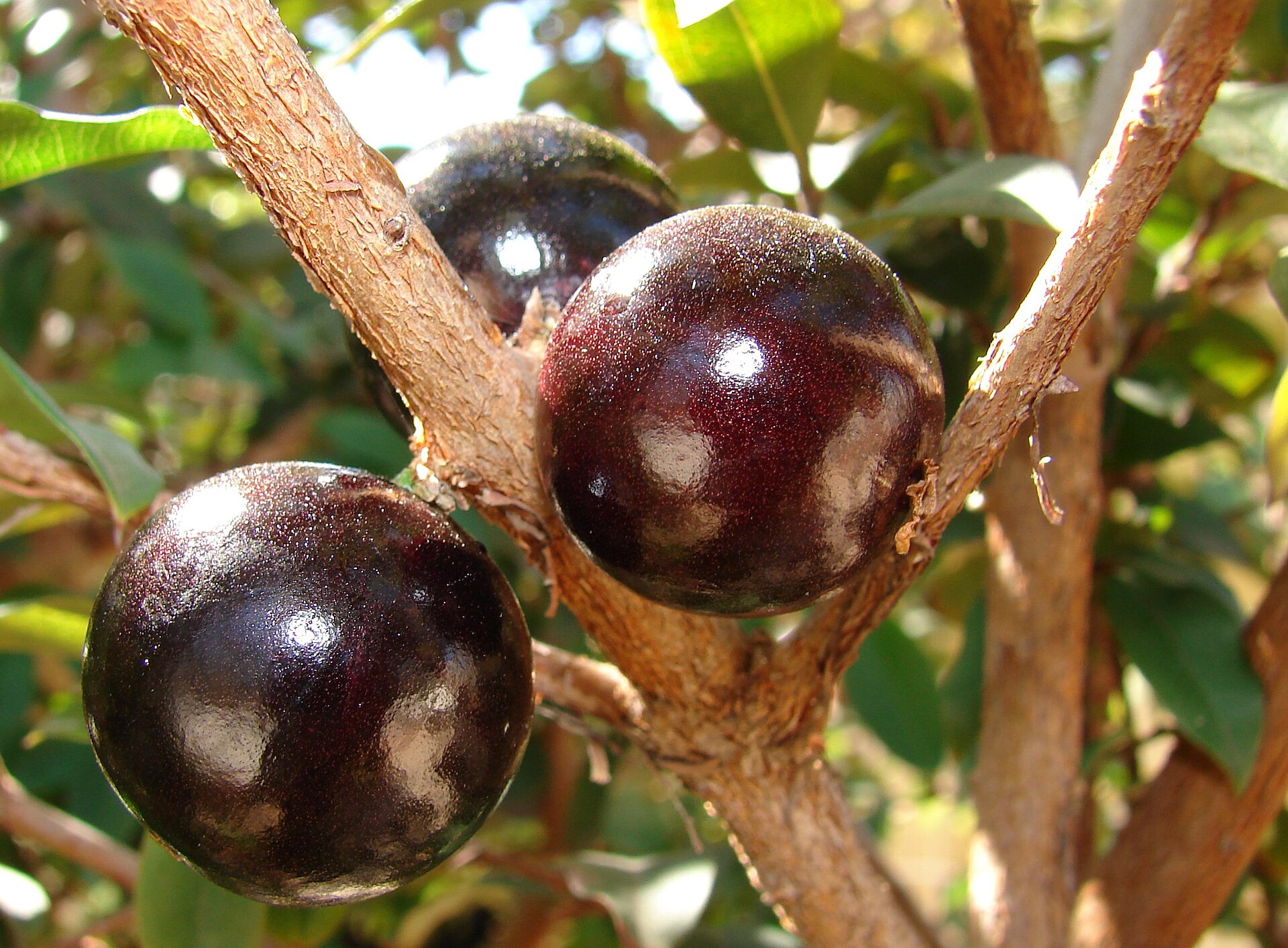
Purple-black Jabuticaba fruits that grow close to the branches
Alexandre Campolina / Wikimedia Commons · CC BY 3.0
01

What makes fresh Jabuticaba distinctive?

The purple-black peel is an important source of anthocyanins and polyphenols.

Jabuticaba's nutritional profile extends beyond its flesh. Published fresh-fruit fiber values are approximately 3.2–4.8% by fresh weight, while anthocyanins and polyphenols are particularly concentrated in the peel. Composition varies with variety, ripeness and the part analyzed. Literature ↗

Representative phytochemicals studied in fresh fruit

  • Anthocyanins Cyanidin-3-glucoside(C3G)
    Delphinidin-3-glucoside
  • Phenolic acids Ellagic acid
    Gallic acid
  • Flavonols Quercetin
    Myricetin derivatives
  • Ellagitannins Ellagitannins
    Castalagin、Vescalagin

These compounds are reported in botanical literature. Castalagin and vescalagin also occur in seeds and flesh; they are not all concentrated in the peel. Composition research ↗

02

Measured results for processed and fermented samples

Six indicators, each traceable to its original report.

All results below are expressed per 100g but come from different submitted samples, including fermented material, solid extracts, extract powders and tablets. They are not the composition of a single fermented powder or finished Five Botanicals product, and they do not measure an increase caused by fermentation.

ORAC

135,000μM TE / 100g

Trolox equivalents; units reproduced from the original report

Solid Jabuticaba peptide extract Original report ↗

Quercetin

25.838mg / 100g

Original report 258.38 μg/g, converted to per 100g

Jabuticaba extract powder Original report ↗

Resveratrol glycoside Piceid

55mg / 100g

Original report 0.55 mg/g, converted to per 100g

SOD Jabuticaba concentrated fermented extract tablets Original report ↗

Total tannins

498.28mg / 100g

Quantitative polyphenol markers

Solid Jabuticaba extract Original report ↗

DPPH radical scavenging capacity

4,113.1mg Vit. C equivalent / 100g

An activity equivalent, not a measurement of vitamin C content

Jabuticaba Tablets Original report ↗
03

Five research directions, starting with the compounds

Explore the research potential and the evidence behind it.

Ex vivo animal tissue research

Blood vessels and circulation

Jabuticaba extract has been studied in isolated rat blood vessels to investigate vasodilation. These mechanistic findings do not establish improved human microcirculation from this product.

Read the research ↗
Research on other anthocyanin compounds

Eyes and extended screen time

Visual fatigue is an area of anthocyanin research. Human trials have examined blends containing anthocyanins, astaxanthin and lutein; their findings cannot be attributed to Jabuticaba alone or applied to this product.

Read the research ↗
Cell and formulation studies

Skin and oxidative stress

Jabuticaba peel polyphenols have been studied for their effects on oxidative stress responses in keratinocyte models. SOD-Like and ORAC are in vitro measurements; they do not establish sun protection or anti-photoaging effects in humans.

Read the research ↗
Human studies of specific peel formulas

Metabolic and inflammatory markers

A randomized controlled trial examined Jabuticaba peel supplementation, post-meal blood glucose and inflammatory markers in adults with metabolic syndrome. The formulation, dosage and study population were specific to that trial, so the findings cannot be equated with the effects of this product.

Read the research ↗
Polyphenols interact with bacteria

Gut and polyphenol metabolism

Gut microbes can metabolize complex polyphenols such as ellagitannins. Metabolites and responses vary between individuals, making this an important area of phytochemical research.

Read the research ↗
04

Beyond anthocyanins: piceid

The glucoside form of resveratrol is another phytochemical component worth knowing.

Submitted Jabuticaba fermented extract tablet sample 55 mg / 100g

0.55 mg/g = 55 mg/100g = 55,000 μg/100g

This is a conversion of piceid content, not free resveratrol content or a recommended daily intake. The original report does not distinguish cis and trans isomers, so the result should be read under the stated test name.

View the piceid test report ↗
Can piceid levels be directly compared with table grapes?

One study of table grapes reported trans-piceid at 8.8–35.7 μg/100g fresh weight and listed cis-piceid separately. Dividing the tablet result, which does not distinguish isomers, by fresh-fruit trans-piceid does not provide a like-for-like comparison. We therefore do not make a "thousand-fold" claim here.

Grape Research Table 2 ↗
Quercetin: reference values for common fruits

The USDA database lists average quercetin levels of 4.01 in raw apples with skin, 1.63 in raw apricots and 0.50 mg/100g edible portion in raw white grapefruit. A purely arithmetic comparison with the extract powder's 25.838 mg/100g gives ratios of approximately 6.4, 15.9 and 51.7.

This compares concentrated powder with fresh fruit across different sources, without adjusting for moisture, variety or analytical methods. It does not measure fermentation enhancement, absorption or relative health effects.

USDA Release 3.3(2018)↗
Why not express ORAC as a multiple of blueberries?

Blueberry values vary by variety, fresh- or dry-weight basis, extraction method and test conditions. No blueberry control tested under the same conditions as this sample is available. We therefore present the original result of 135,000 and retain the qualifications needed for comparison.

BOTANICAL PROFILE

Polyphenols and anthocyanins in deep-purple peel

Jabuticaba fruits grow directly on tree trunks and old branches and are purple-black when ripe. Peel pigments and polyphenols are the focus of its research and testing.

Key phytochemicals

QuercetinResveratrol glycoside PiceidTotal tanninsAnthocyanins and polyphenols
Jabuticaba plant photograph
Jabuticaba flowers and fruits directly on its trunk and mature branches. The photograph shows young fruit along the branches before it turns purple-black. Photos: Wikimedia Commons contributor · CC0
ONLINE SHOP Shop now