Noni: plant and growing conditions
NONI · BOTANICAL PROFILE

Noni

Morinda citrifolia

A resilient fruit from tropical coastlines

BOTANICALS & EVIDENCE

Noni Ingredients, SOD-Like and Antioxidant Testing

Noni (Morinda citrifolia) is commonly processed into juice, fruit powder or fermented ingredients. This page provides botanical background and access to the SOD-Like report for Noni concentrated extract powder.

Botanical name
Morinda citrifolia
On this page
SOD-Like activity test of Noni concentrated extract powder
Data checked

What do these test results tell us?

Noni concentrated extract powder is a single-ingredient test sample. A separate report covers SOD extract tablets containing Amla, Noni, Jabuticaba and apple. Total tannins measured in that blend cannot be attributed to Noni alone.

The information below covers botanical background or tests on specific samples. In vitro antioxidant measurements alone do not establish anti-inflammatory effects or disease-related benefits in humans.

Check Noni Original test reports and sample details →
NONI · IRIDOIDS · POLYSACCHARIDES

Gut health × resilience × Physiological regulation

Explore Noni's iridoids, scopoletin and polysaccharides through fresh-fruit data, measured activity and published research on the gut and physiological regulation.

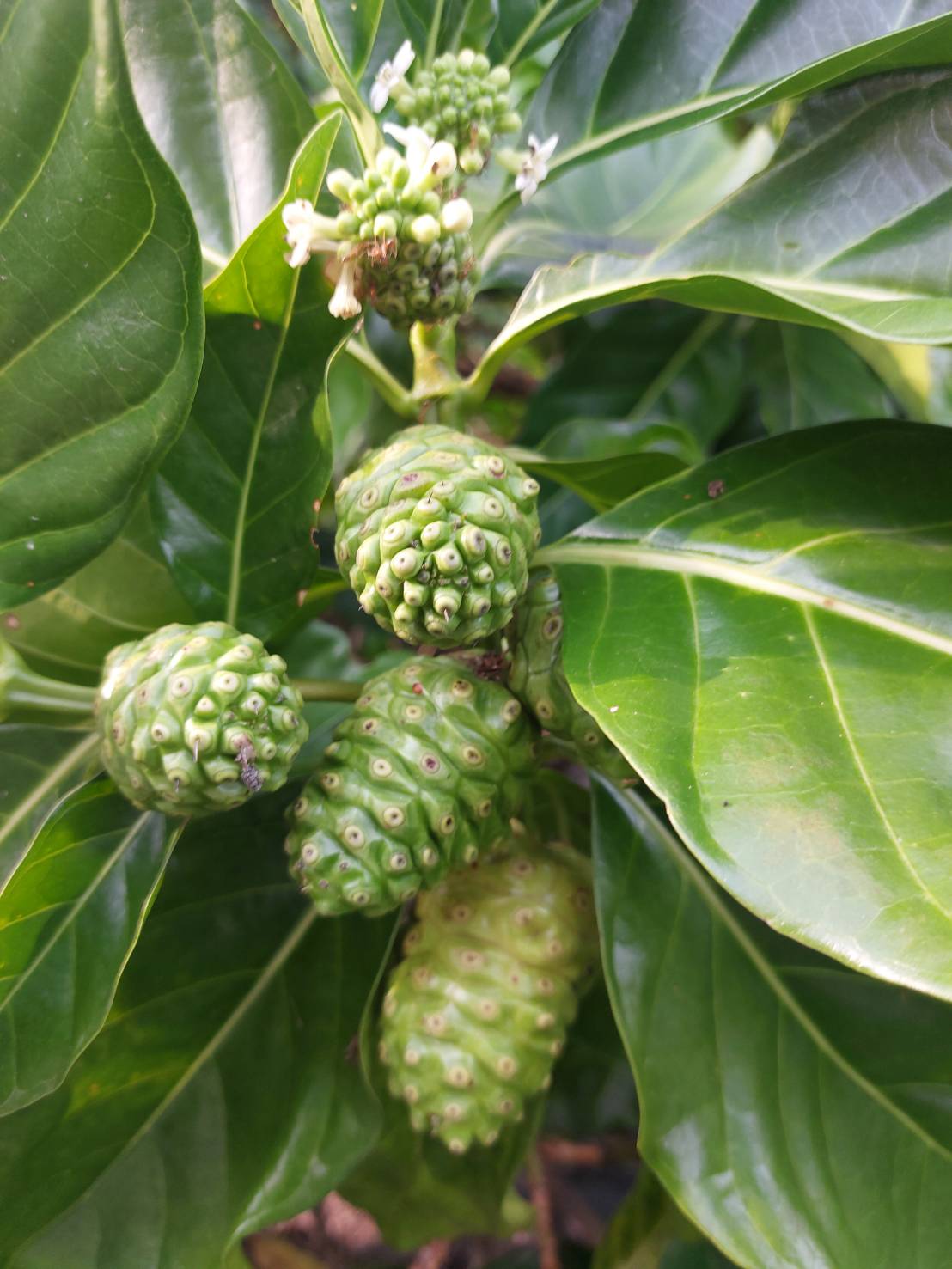
White flowers and fruits at different stages of maturity on the Noni plant
Hojing International ingredient records
01

Understanding Noni through identifiable compounds

Iridoids, scopoletin and polysaccharides help explain Noni's distinctive phytochemical profile.

Noni (Morinda citrifolia) research covers iridoid glycosides, coumarins, polysaccharides and flavonoids. Studies have measured DAA, asperulosidic acid, rutin and other compounds in powders, juices and capsules, with levels varying by sample and processing. Composition analysis ↗

  • Iridoids Deacetylasperulosidic acid(DAA)
    Asperulosidic acid
  • Coumarins Scopoletin
    Botanical markers that can be analyzed
  • Flavonoids Rutin
    Kaempferol
  • Polysaccharides Noni polysaccharides
    Research examines their structure and interactions with gut microbes.

Kaempferol and scopoletin have been isolated from Noni, while asperuloside and aucubin are also reported in botanical literature. The plant part, extraction method and sample need to be checked for each finding. This is not a list of compounds all detected in this product. Study of compounds isolated from the fruit ↗ Phytochemical literature overview ↗

Why not use "Xeronine" as the core of the introduction?

University of Hawaii information notes insufficient confirmation of the existence and claimed effects of xeronine and its precursors. This page therefore focuses on iridoids, scopoletin, flavonoids and polysaccharides traceable through analytical research.

University of Hawaii Noni ingredient information ↗
02

Measured activity of Noni concentrated extract powder

Sample identity, test methods and original units are retained so each result can be checked.

SOD-Like · Superoxide dismutase-like activity 125,000,000U / 100g

1.25 × 10⁸ Unit/100g

Sample: Noni concentrated extract powder
Report date: 2023-10-31
Report number: OHC 231027-F007A
Method: Chemiluminescence Method

View the original SOD-Like report ↗

This result describes in vitro activity in the tested extract powder, not enzyme content or effects in humans. Without a before-and-after comparison, the report cannot establish an increase caused by fermentation.

Compound measurements still needed

DAA、Asperulosidic acid、Scopoletin

These compounds are useful analytical targets for understanding Noni. The single-ingredient reports available on this page do not yet provide quantitative results for them.

Compound totals and activity are different measurements

Total iridoids, polyphenols, polysaccharides and ORAC

Total iridoids, polyphenols and polysaccharides are composition measurements; ORAC measures in vitro antioxidant activity. No product content or activity is listed for these items without a corresponding report.

03

The gut and physiological regulation: Where is the research going?

Explore the research directions and the limits of the evidence.

Polysaccharides · Mouse study

Gut health and the microbiome

Noni polysaccharides have been studied in mouse models of intestinal inflammation, with attention to gut microbes, short-chain fatty acids and intestinal responses. These findings inform microbiome research; they do not establish that this product improves irregular bowel movements.

Read the research ↗
Fruit Extract · Cell and Animal Research

Immunity and physiological regulation

Studies have used Noni extracts and isolated compounds to examine macrophage inflammatory signaling and immune responses in animals. These findings apply to specific experimental conditions and do not establish improved health or resilience in humans.

Read the research ↗
Scopoletin, Rutin · In vitro studies

Polyphenols and oxidative stress

Researchers have isolated scopoletin, rutin and quercetin from Noni puree to investigate cellular responses. Identifying compounds and testing laboratory activity help characterize the plant; they do not establish anti-fatigue or recovery benefits.

Read the research ↗
How does this relate to eating out, fatigue, irregular routines and healthy aging?

Gut function, oxidative stress and everyday wellbeing are research themes relevant to Noni. Current data are insufficient to claim that this product improves digestive instability, irregular bowel movements, persistent fatigue, sensations described in traditional terms as "internal heat," or recovery in older adults. Overall constitution or resilience is not a single outcome that can be established by SOD-Like values.

The US NCCIH notes that human studies of Noni remain limited. Laboratory findings require confirmation in human research.

NCCIH Current Status of Noni Research ↗
04

Vitamin C in Noni puree and common fruits

Reference values per 100g, not a comparison of health effects.

Compared with raw apples with skin about 25 times

113 ÷ 4.6 ≈ 24.6
The units are mg vitamin C / 100g

Compared with the lower value in a blueberry study about 14 times

113 ÷ 8.1 ≈ 14.0
The units are mg vitamin C / 100g

113 mg is from the processed Noni puree study, and 4.6 mg is the USDA raw apple with skin data; 8.1 mg is the lower value of a blueberry variety study, which ranged from 8.1–15.6 mg/100g fresh weight, so the calculated range relative to blueberries is approximately 7.2–14 times. This is a comparison across studies and different sample types. It is not a fixed difference for all raw fruits, nor can it be regarded as the vitamin C content of this product.

BOTANICAL PROFILE

A resilient fruit from tropical coastlines

Noni is an evergreen shrub or small tree. Its ripe fruit has a strong aroma and is commonly processed into juice, fruit powder or fermented ingredients.

Key phytochemicals

PolyphenolsFlavonoidsAmino acidsMinerals and dietary fiber
Noni plant photograph
Noni is an evergreen plant that grows in warm tropical regions, tolerates salt-laden winds and adapts to a range of soils. Photos: Michael Hermann / Crops For the Future · CC BY-SA 3.0
ONLINE SHOP Shop now